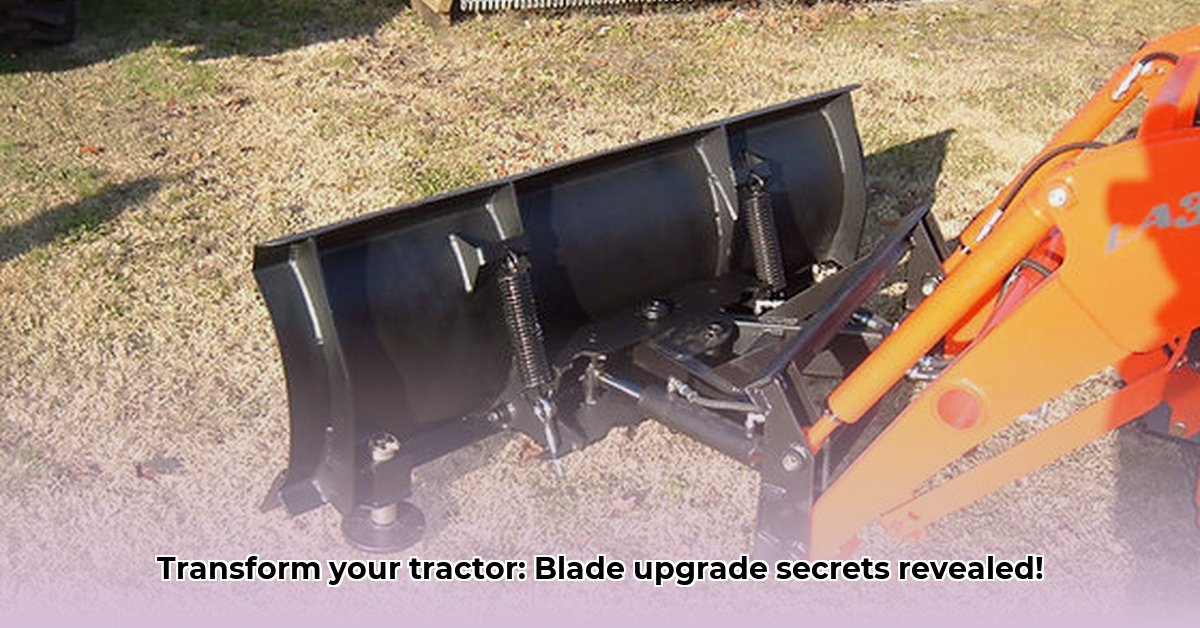
Tractor Front Blades: A Guide to Selection, Use, and Maintenance
Want to boost your farm's efficiency and sustainability? Upgrading your tractor's front blade is a smart investment. This guide provides a comprehensive overview of selecting, installing, maintaining, and operating front blades effectively, minimizing environmental impact and maximizing your return on investment. For more information on compact tractor plows, check out this helpful resource: Compact Tractor Plows.
Types of Tractor Front Blades
Several blade types cater to diverse needs. Choosing the right one depends on your specific applications and tractor capabilities.
Straight Blades
- Description: Simple, straightforward design for general-purpose tasks.
- Pros: Affordable, versatile for light grading, snow removal, and general land maintenance.
- Cons: Less precise than angle blades, may wear out faster with heavy use.
- Best Use Cases: Light grading, snow removal, general land clearing.
Reversible Blades
- Description: Feature a reversible cutting edge, extending lifespan and reducing waste.
- Pros: Doubles the blade's operational life, cost-effective, environmentally friendly.
- Cons: Slightly more complex operation compared to straight blades.
- Best Use Cases: Prolonged use, tasks involving significant edge wear (e.g., gravel work).
Angle Blades
- Description: Hydraulically adjustable angle for precise control and improved efficiency.
- Pros: Highly precise, excellent control, enhances efficiency for complex tasks.
- Cons: Higher initial cost.
- Best Use Cases: Ditch cleaning, creating precise slopes or levels, intricate shaping.
Choosing the Right Front Blade: A Step-by-Step Guide
Selecting a front blade involves careful consideration of several factors:
Step 1: Tractor Specifications: Consult your tractor's manual to determine its horsepower and hydraulic capacity. The blade must be compatible to avoid damage. Don't you want your investment to last?
Step 2: Task Definition: Identify your primary applications (snow removal, land clearing, grading, etc.). This influences blade type and features. Would a reversible blade better suit your frequent use, or is a straight blade sufficient for occasional tasks?
Step 3: Budget Allocation: Set a realistic budget. Blade prices vary significantly; consider not just the initial cost but also the expected lifetime and maintenance expenses.
Step 4: Comparative Analysis: Research different models from reputable dealers. Compare features, durability, warranties, and customer reviews before making a decision. This is an asset for your farm, so take the time to do your research.
Step 5: Expert Consultation: Consult your local agricultural equipment dealer for expert advice tailored to your specific needs and operating conditions. Their experience is invaluable.
Installation, Maintenance, and Safe Operation
Following manufacturer instructions is crucial for safe and efficient operation.
Installation: Securely attach the blade to your tractor's three-point hitch or quick-attach system, following the manufacturer's instructions meticulously.
Maintenance: Regularly inspect for wear and tear, focusing on the cutting edges. Lubricate moving parts as recommended. Replace worn components promptly to extend lifespan and prevent accidents. Is regular maintenance really that crucial? Absolutely; neglecting it invites costly repairs and potentially dangerous situations.
Safe Operation: Always engage safety features, maintain situational awareness, and wear appropriate protective gear during operation. Remember, safety should always be your top priority.
Operational Techniques for Maximum Efficiency
Proper technique significantly impacts efficiency and outcome.
Grading: Overlapping passes ensure a smooth finish. Avoid excessive pressure to minimize soil compaction.
Snow Removal: Adjust the blade angle for optimal snow pushing. Multiple passes are safer and more efficient than overloading the blade.
Land Clearing: Remove large obstacles first, working systematically to prevent damage.
Cost-Benefit Analysis and Sustainability
Consider the total cost of ownership: initial purchase price, maintenance, fuel consumption, and lifespan. A durable blade might cost more upfront but save money in the long run through reduced repairs and replacements.
Prioritize sustainable practices: choose blades made from recycled materials or designed for longer lifespans. This reduces waste and minimizes environmental impact.
Conclusion: Making Informed Decisions
Choosing the right tractor front blade is a critical decision impacting efficiency, cost, and sustainability. By following this guide and prioritizing safety, you'll make an informed choice that enhances your farm's productivity for years to come.
Resources
(Include links to relevant manufacturers, suppliers, and further reading here)